Why Learn German? 8 Benefits for Students and Professionals
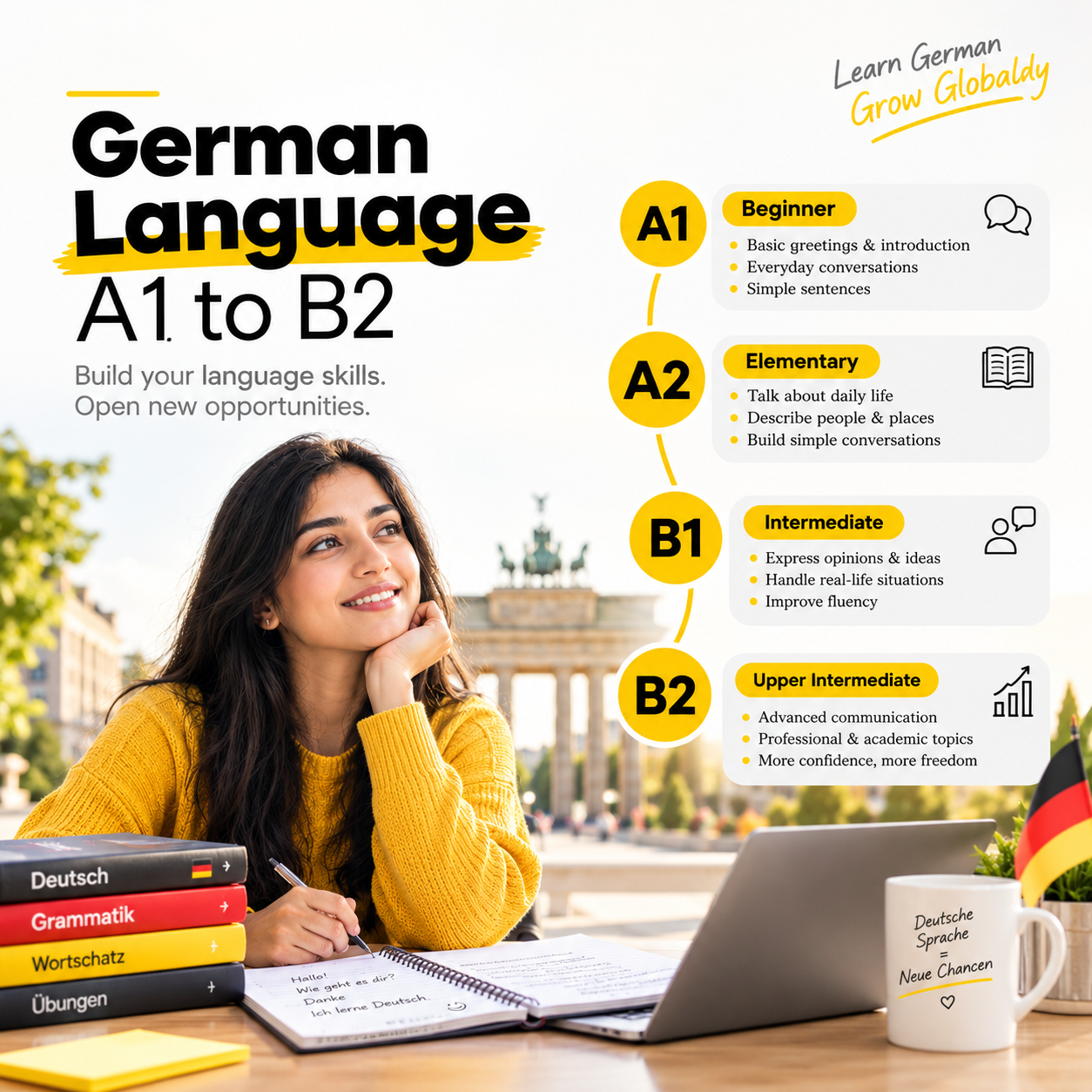
Learning a foreign language can create new academic and professional opportunities. A German Language Course is a practical choice for students planning to study in Germany and professionals seeking international career options. German is used in universities, businesses, healthcare, engineering, manufacturing, and information technology. Learning the language can help people understand university requirements, communicate with employers, and adapt to everyday life in a German-speaking environment. From exploring more study programs to developing a valuable professional skill, German offers several practical benefits. Understanding these eight advantages can help learners decide which proficiency level to target and how to choose a suitable learning method.
8 Benefits of Learning German at a Glance
|
Benefit |
Who It Helps Most |
Why It Matters |
|
1. Wider choice of study programs |
Students |
Makes more German-taught programs accessible |
|
2. Better preparation for university admission |
Students |
Supports language preparation for applications |
|
3. Career roles in India that use German |
Professionals |
Creates opportunities in language-related roles |
|
4. Opportunities with German companies in India |
Professionals |
Supports communication in international business |
|
5. Pathways to work in Germany |
Professionals |
Helps prepare for roles requiring German proficiency |
|
6. A recognized certificate that supports applications |
Students and Professionals |
Provides documented evidence of language ability |
|
7. Easier daily life and integration in Germany |
Students and Professionals |
Improves communication in everyday situations |
|
8. A rare skill that makes a resume stand out |
Professionals |
Adds a useful skill to a candidate's profile |
Benefits for Students
1. Wider Choice of Study Programs
Germany attracts international students through its range of academic programs and public universities, many of which are known for charging little or no tuition fees. However, tuition arrangements vary by institution, program, and location, so students should verify the actual costs before applying.
Many university programs are taught in German. Learning the language can therefore widen the selection of courses available to students who would otherwise focus only on English-taught options. A structured German Language Course helps learners develop the skills needed to explore these opportunities.
2. Better Preparation for University Admission
University admission requirements depend on the institution, degree, and language of instruction. German-taught programs often require proof of German proficiency, while some programs may accept specific language examinations or alternative qualifications.
Preparing early gives students time to develop reading, writing, listening, and speaking skills before application deadlines. A suitable course can also help learners understand examination formats and practise academic communication.
Students should confirm the required proficiency level and accepted certificates directly with their chosen university rather than assuming that the same requirements apply everywhere.
6. A Recognized Certificate That Supports Applications
A language certificate can provide documented evidence of German proficiency. Goethe-Zertifikat and ÖSD examinations are internationally recognized qualifications, and certificates from these examination systems are often relevant to university admissions and certain work or visa applications.
An online German language course with certificate can help learners study systematically and receive a completion certificate after each level. However, a course completion certificate is not automatically equivalent to an internationally recognized examination certificate. Learners should understand this distinction before applying to a university or employer.
A German language course online with certificate may include live lessons, mock tests, and speaking practice to prepare learners for external examinations. The exact certificate accepted depends on the receiving institution or official authority.
7. Easier Daily Life If You Move to Germany
Knowing German can make everyday activities more manageable for students and professionals relocating to Germany. Tasks such as communicating with landlords, visiting shops, understanding public information, and speaking with local residents often become easier with stronger language skills.
German proficiency can also help newcomers participate in community activities and build social connections. Even basic A1 and A2 skills provide a useful starting point, while B1 and B2 can support more independent communication.
Language ability does not remove every challenge of relocation, but it can make adapting to a new environment more comfortable.
Benefits for Professionals
3. Career Roles in India That Use German
German-speaking professionals can explore several language-related career paths in India. Depending on their proficiency, qualifications, and experience, they may find opportunities as German BPO or KPO executives, translators, language trainers, customer support professionals, or content writers.
These roles can involve assisting international customers, translating business information, supporting overseas operations, or preparing content for German-speaking audiences. Some positions require advanced German, while others may combine intermediate language skills with technical or customer service expertise.
A German Language Course can help learners build a foundation for these roles, although employment depends on the specific requirements of each employer.
4. Opportunities with German Companies in India
German companies operate in India across sectors such as automotive, manufacturing, and information technology. These businesses may need employees who can communicate with German-speaking colleagues, customers, suppliers, or international teams.
German proficiency can be useful in customer relations, project coordination, administration, technical support, and other business functions. The value of the language depends on the role, and many positions also require relevant professional qualifications.
For candidates interested in international business, German can complement an existing background in engineering, IT, management, or customer service.
5. Pathways to Work in Germany
German proficiency can be relevant to employment opportunities in Germany, particularly in fields such as IT, healthcare and nursing, engineering, and vocational training through Ausbildung.
In some situations, B1 or B2 German can help candidates meet language expectations for particular roles or training programs. However, the required level varies by occupation, employer, qualification, and visa category. Some regulated professions may require additional recognition procedures or higher language proficiency.
Learning German should therefore be part of a broader career plan that includes qualifications, experience, and official eligibility requirements. A language certificate alone does not guarantee employment, visa sponsorship, or permission to work.
8. A Rare Skill That Makes a Resume Stand Out
German can help candidates differentiate themselves when applying for roles involving international communication. It may be particularly relevant when an employer works with German clients, manages overseas projects, or requires employees to understand German-language documents.
The strongest advantage often comes from combining language proficiency with an existing skill. For example, a software professional who understands German may be better prepared for certain international client-facing responsibilities than someone with technical skills alone.
Candidates should mention their actual proficiency level on their resumes and avoid overstating their speaking or writing abilities.
From A1 to B2: How Long Does It Take to Benefit?
German proficiency is measured using the Common European Framework of Reference for Languages (CEFR). The A1, A2, B1, and B2 levels represent increasing language ability.
|
Level |
Approximate Duration |
What Learners Can Do |
|
A1 |
2 months |
Understand and use basic everyday expressions |
|
A2 |
2 months |
Handle simple, routine conversations |
|
B1 |
3 months |
Communicate in many familiar everyday situations |
|
B2 |
3 months |
Discuss a wider range of topics with greater independence |
The complete journey from A1 to B2 takes roughly 10 months, including examination preparation. Actual progress depends on attendance, practice, previous language experience, and learning pace.
Preparation commonly includes Goethe-Zertifikat and ÖSD examination formats, mock tests, and speaking exercises. Learners should select a target level according to their academic or professional goals.
Signs You Should Start Learning German Now
German may be worth learning if any of the following situations apply:
-
A student is considering a German-taught university program.
-
A graduate wants to explore international career opportunities.
-
A professional works with overseas customers or business partners.
-
A candidate is researching Ausbildung or employment pathways in Germany.
-
A learner wants to prepare for a recognized German proficiency examination.
-
A future traveller or resident wants to communicate more confidently in Germany.
Starting early allows learners to build language skills gradually rather than preparing under pressure before an application deadline.
Why Online Classes Work Well for Students and Working Professionals
Online learning makes German education accessible to people who cannot regularly travel to a physical classroom. German classes online can be delivered through live sessions, allowing learners to interact with instructors, ask questions, and practise conversations.
German language training online can also help learners maintain a consistent schedule alongside university, employment, or other responsibilities. German learning classes online may include structured lessons, speaking activities, revision exercises, and mock examinations. With suitable instruction, German courses online can support a learning plan from beginner to intermediate levels.
Key benefits of online learning include:
-
Flexible scheduling: Choose suitable weekday or weekend batches when available.
-
Less commuting: Attend classes from home or another convenient location.
-
Live interaction: Practise speaking and receive feedback during lessons.
-
Structured progression: Follow a learning plan from A1 through B2.
-
Exam preparation: Practise examination tasks and complete mock tests.
-
Convenient revision: Review learning materials between live sessions when provided.
Online classes still require regular attendance, independent practice, and active participation to deliver meaningful progress.
How to Choose the Right German Language Course
Choosing a suitable German Language Course involves more than comparing class schedules. Learners should evaluate teaching quality, examination preparation, lesson structure, and the support available throughout the learning journey.
Someone searching for the Best online German language course in India should compare providers according to their own goals rather than relying on promotional claims. A German language course India online may be suitable for learners who need flexibility but still want structured teaching and speaking practice.
Before enrolling, learners should check:
-
Whether classes are live and interactive.
-
Whether trainers have relevant German teaching qualifications.
-
Whether speaking practice and regular feedback are included.
-
Whether Goethe-Zertifikat and ÖSD examination preparation is available.
-
Whether the program offers a clear A1-to-B2 progression and level completion certificates.
-
Whether study-abroad guidance, university applications, or visa documentation support is available when needed.
Learners should also confirm class duration, attendance expectations, examination fees, and the exact nature of any certificate before making a decision.
Why German Language in India Is Growing as a Practical Skill
German language in India is relevant to students and professionals interested in education, international business, and cross-border communication. German companies operating in automotive, manufacturing, and IT create potential demand for people who can communicate effectively with German-speaking teams and customers.
The language can complement professional qualifications in engineering, technology, business operations, translation, and customer support. For students, it can also help broaden the range of academic programs worth exploring.
The most practical approach is to connect language learning with a specific objective, such as university admission, professional development, or preparation for relocation.
Learners in Other Cities: Pune and Chandigarh
Learners do not necessarily need to live in a major language-learning centre to begin studying German. A German language course in Pune can suit students and professionals who prefer local classroom options, while live online learning provides an alternative for those who need greater flexibility.
Similarly, a German language course in Chandigarh can help local learners work toward their academic or career goals. Online classes allow learners in both cities to follow the same structured A1-to-B2 learning approach, subject to the availability and schedule of their chosen provider.
Regardless of location, learners should prioritize consistent practice, appropriate examination preparation, and a clear understanding of their target proficiency level.
Conclusion
Learning German can help students explore a wider range of university programs and prepare for admission requirements, while professionals can develop skills relevant to international business and language-related careers. It can also support everyday communication in Germany and add value to an existing professional profile.
A well-structured German Language Course provides a practical starting point for building these skills. Learners can begin by identifying their target level, checking the requirements of their preferred university or employer, and selecting a learning schedule they can maintain consistently. The next step is simple: choose an initial goal, assess the required German proficiency level, and start building the language skills needed to reach it.
Categorie
Leggi tutto
According to the latest report published by Data Bridge Market Research, the Fluoroelastomer Market CAGR Value The global fluoroelastomer market size was valued at USD 41.31 billion in 2025 and is expected to reach USD 52.33 billion by 2033, at a CAGR of 3.00% during the forecast period The market growth is largely fueled by the increasing demand for high-performance sealing...

KIS5 鎧斯5號 的產品線涵蓋換彈式主機、煙彈以及 6500口拋棄式,因此在選擇 KIS5電子煙 時,第一步不是只看外觀或口味,而是先確認自己需要哪一類產品,再比較電池、煙彈相容性與霧化結構。 如果選擇換彈主機,可以在 KIS5 一代主機與 KIS5 FLY 二代主機之間比較。兩者屬於不同產品世代,機身造型、電池配置、充電方式與適配煙彈可能有所不同,因此應查看具體型號,而不是只依名稱判斷。 煙彈方面,KIS5 鎧斯5號 同樣有一代煙彈與 KIS5 FLY 二代煙彈。選擇時要確認容量、阻值、霧化方式與相容電子煙主機。不同代數即使外觀接近,也不代表一定能互相通用。 KIS5 6500口拋棄式則屬於另一種產品方向,電池、煙油與霧化系統整合在同一機身,不需要另外購買主機與煙彈,因此使用方式與換彈式 KIS5電子煙 不同。 整體來說,選擇 KIS5 鎧斯5號...

The Dull Polyester Chips Market is gaining importance as textile manufacturers increasingly seek polyester materials that provide controlled luster, consistent appearance, durability, and reliable processing characteristics. Dull and semi-dull polyester chips are primarily used as feedstock for producing polyester fibers and yarns, with demand closely connected to apparel, home furnishing,...
The growth of e-commerce, food delivery, retail distribution, and consumer goods is increasing demand for paper-based packaging. Manufacturers are seeking packaging materials that are lightweight but strong enough to withstand transportation and handling, creating opportunities for dry strength additives. The Paper Dry Strength Agent Market is benefiting from rising demand for packaging...
