Aerospace Propellant Market Advances Through Next-Generation Propulsion Technologies
The expansion of satellite deployment, space exploration, launch services, and spacecraft development is increasing demand for reliable propulsion technologies. Propellants are fundamental to rocket and spacecraft propulsion because they provide the reaction mass and chemical or physical energy required to generate thrust. Modern aerospace systems use different propulsion architectures depending on mission duration, maneuvering requirements, payload, storage conditions, and vehicle design.
The Aerospace Propellant Market includes materials used across liquid, solid, hybrid, and other spacecraft propulsion systems. NASA describes liquid and solid rockets as two major categories, while hybrid systems combine characteristics of solid and liquid propulsion.
Liquid propellants remain important for launch vehicles and spacecraft requiring controllable thrust. In liquid systems, fuel and oxidizer are stored separately and supplied to the combustion chamber. NASA notes that liquid propulsion can provide controllability because propellant flow can be regulated, making it suitable for missions requiring precise maneuvering and propulsion management.
Solid propellants offer different advantages. Because the fuel and oxidizer are incorporated into a solid propellant grain, solid motors can provide relatively compact propulsion systems with long-term storage capabilities. NASA identifies solid motors as suitable for applications including launch-vehicle boosters and certain spacecraft maneuvers.
The growth of small satellites is creating additional opportunities. Spacecraft designers require propulsion systems capable of supporting orbital insertion, attitude control, station keeping, deorbiting, and other maneuvers. NASA's Small Spacecraft Systems Virtual Institute identifies cold-gas, solid, hybrid, and electric propulsion approaches among technologies being considered for small-spacecraft missions.
Hybrid propulsion is receiving attention because it combines a solid fuel component with a separately stored oxidizer. NASA notes that hybrid systems can combine aspects of solid-motor storability with liquid-system control characteristics. This creates opportunities for aerospace manufacturers developing propulsion systems with alternative architectures.
Research and development are also focusing on advanced propellant materials, improved storage characteristics, environmental considerations, and manufacturing consistency. Propellant selection must account for energy performance, density, thermal behavior, compatibility with propulsion hardware, storage requirements, and mission objectives.
The market is also influenced by increasing spacecraft activity and the need for reliable in-space maneuvering. NASA identifies propulsion subsystems as essential for spacecraft maneuvering and navigation and maintains testing capabilities covering multiple propulsion categories.
Safety, storage, transportation, and regulatory compliance remain critical challenges. Propellant manufacturers and aerospace operators require controlled handling procedures, specialized facilities, quality assurance, and extensive testing before materials can be incorporated into flight systems.
Overall, the Aerospace Propellant Market is developing alongside the expansion of commercial spaceflight, satellite services, exploration missions, and advanced spacecraft. Continued innovation in propulsion architectures, material performance, storage, and manufacturing can broaden the range of propellant technologies available for future aerospace missions.
Catégories
Lire la suite
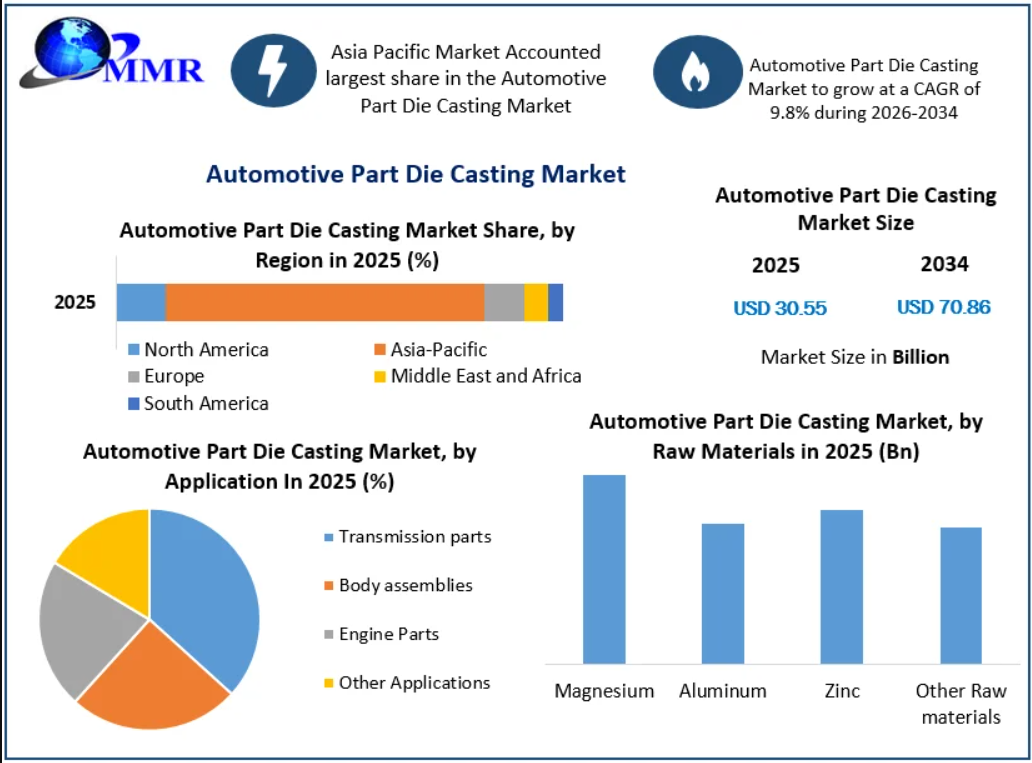
Automotive Part Die Casting Market Overview The Automotive Part Die Casting Market report provides an in-depth analysis that is required to make informed industry decisions and develop strategic growth plans. Regardless of the production method or cost structures, the Automotive Part Die Casting market report provides a full understanding of advanced tactics and...
В современном мире, где время становится самым ценным ресурсом, крайне важно иметь под рукой надежный инструмент для самоорганизации. Наш новый ежедневник 2026 года разработан специально для тех, кто стремится к максимальной продуктивности и порядку во всех сферах жизни. Это не просто цифровой блокнот, а полноценный ежедневник онлайн, который позволяет выстраивать детальные планы на день,...

" According to the latest report published by Data Bridge Market Research, the Gluten-Free Bakery Products Market Data Bridge Market Research analyses that the global gluten-free bakery products market, which was USD 5.56 billion in 2022, is expected to reach USD 11.75 billion by 2030, growing at a CAGR of 9.1% during the forecast period of 2023 to 2030. Market research analysis and...
" According to the latest report published by Data Bridge Market Research, the Small Domestic Appliances (SDA) Market The global small domestic appliances (SDA) market was valued at USD 328.99 billion in 2024 and is expected to reach USD 546.53 billion by 2032 During the forecast period of 2025 to 2032 the market is likely to grow at a CAGR of 6.55%, primarily driven by rapid...
Packaging machinery and converting automation is becoming a capital planning priority for manufacturers managing frequent product changes, sanitation stops, labor constraints, and increasingly complex production lines. According to the latest market analysis by Future Market Insights (FMI), the global Packaging Machinery & Converting Automation Market is projected to grow from USD 52.6...