English
 Arabic
 French
 Spanish
 Portuguese
 Deutsch
 Turkish
 Dutch
Dutch
 Italiano
 Russian
 Romaian
 Portuguese (Brazil)
 Greek
Greek

Per Diem Nurse Staffing Market Landscape, Size, Share, Segments & Trend Analysis
Other |
2026-03-19 06:23:48
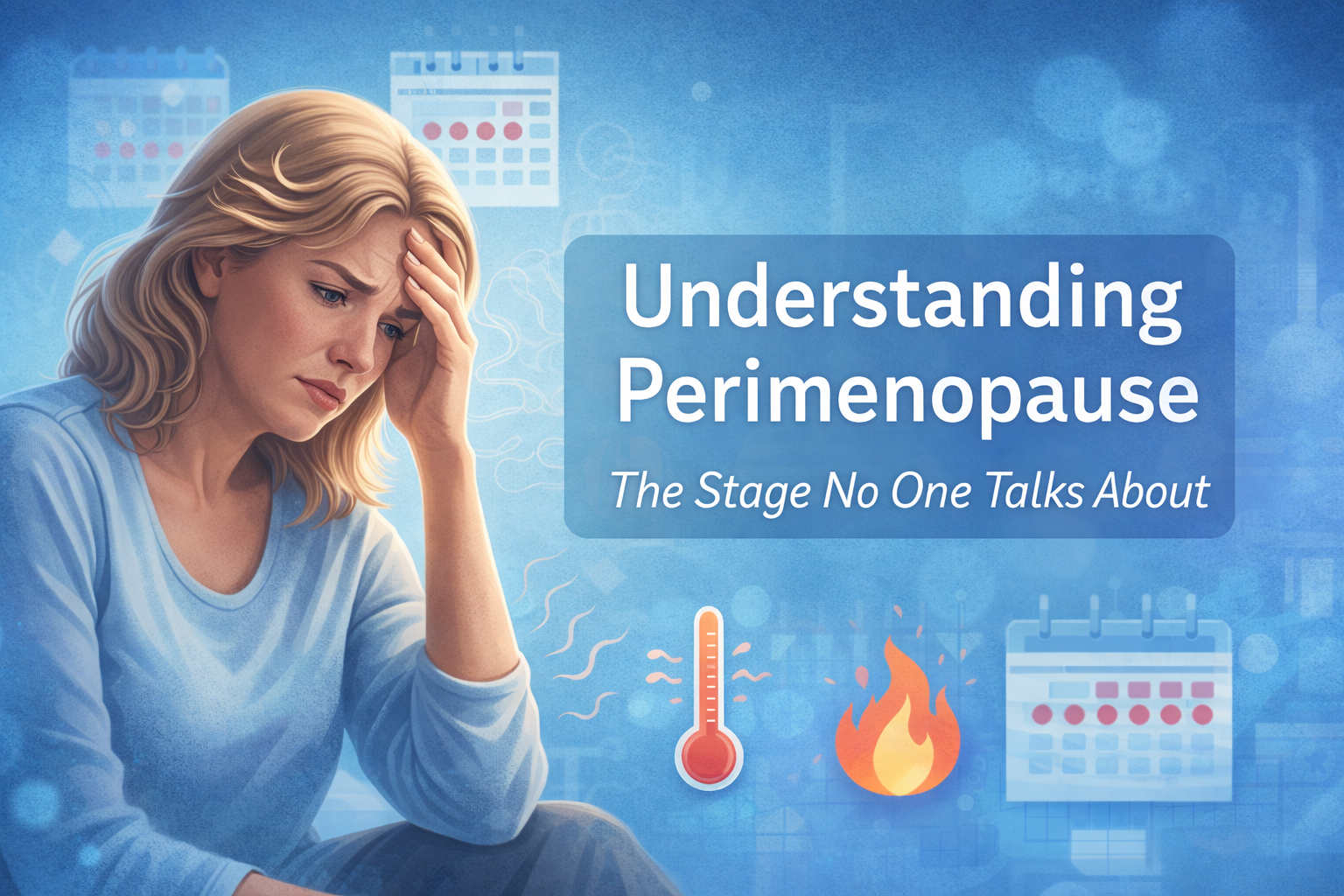
You’re in your early 40s. Your periods haven’t stopped, but your body feels different. You’re more tired than usual, your mood shifts quickly, sleep is unpredictable, and your weight seems to change without reason.
If this sounds familiar, you’re likely experiencing perimenopause. And despite what many people are told, you’re not too young.
Perimenopause is the transition phase before menopause, and it often starts years earlier than expected. It is one of the most overlooked yet impactful stages in a woman’s life.
Perimenopause means “around menopause.” It is the time when your ovaries gradually produce less estrogen and progesterone.
Unlike menopause, where periods stop completely, perimenopause still includes menstrual cycles, though they become irregular. This phase continues until you go 12 months without a period.
Think of it as a hormonal transition phase, similar to puberty, but in reverse.
During perimenopause, hormones don’t decline steadily. Instead, they fluctuate unpredictably.
These changes impact multiple systems in your body, not just your reproductive cycle.
Most women experience several symptoms, often without realizing the cause.
Cycles may become shorter, longer, heavier, or skipped altogether.
Sudden waves of heat, often disrupting sleep and daily life.
Difficulty falling asleep, waking at night, or early morning awakenings.
Irritability, anxiety, or low mood caused by hormonal shifts.
Trouble focusing, memory lapses, or feeling mentally slow.
Fat redistribution, especially around the abdomen, even without lifestyle changes.
Dryness, discomfort, or reduced sexual desire.
Many women are told it’s just stress, aging, or lifestyle changes. The confusion happens because:
In reality, symptoms and cycle changes are the most reliable indicators.
Perimenopause symptoms are manageable with the right approach.
Finding a knowledgeable healthcare provider makes a huge difference. You should never feel dismissed.
Perimenopause is not just about symptoms. It affects:
But here’s the truth most people don’t say clearly enough:
You’re not losing control. Your body is adapting.
With awareness and the right strategies, this phase becomes manageable and even empowering.
Perimenopause is a natural transition, but that doesn’t mean you should struggle through it without support.
The symptoms are real. The changes are biological. And solutions exist.
You’re not alone in this, and you don’t have to figure it out the hard way.