Why Most Incident Response Plans Fail in the First 30 Minutes of an Attack

Most organizations believe they are prepared for a cyber incident. They have incident response (IR) plans, documented playbooks, escalation paths, and crisis-management procedures. On paper, everything looks ready. Yet when real attacks occur, many of these plans collapse within the first 30 minutes—the most critical window of any breach.
The problem isn’t a lack of planning. It’s that modern attacks move faster than traditional Incident Response(IR) models were ever designed to handle.
The First 30 Minutes Decide Everything
In today’s threat landscape, cyberattacks unfold at machine speed. What once took days now happens in minutes:
- Initial access: seconds to minutes
- Credential harvesting: minutes
- Lateral movement: under 30 minutes
- Ransomware deployment or data staging: often within an hour
If defenders fail to act decisively in the opening moments, attackers gain irreversible momentum. Unfortunately, this is exactly where most IR plans break down.
Failure #1: Detection Happens Too Late
Many incident response plans assume the attack has already been detected. In reality, detection is often delayed. Identity abuse, living-off-the-land techniques, and encrypted traffic rarely trigger obvious alerts.
By the time a SOC confirms an incident:
- The attacker has already moved laterally
- Privileged accounts may be compromised
- Persistence mechanisms may be in place
An IR plan that starts after confirmation is already behind. Modern incident response process must assume early-stage ambiguity and act on high-confidence signals before full certainty is achieved.
Failure #2: Manual Investigation Slows Everything Down
Traditional IR workflows depend heavily on human-driven investigation:
- Analysts validate alerts
- Logs are pulled from multiple tools
- Context is assembled manually
- Tickets are opened and escalated
This process takes time—time attackers use to escalate access and expand their footprint. Even highly skilled teams cannot investigate at machine speed.
In the first 30 minutes, speed matters more than perfection. Plans that prioritize exhaustive analysis before containment often fail to stop the breach.
Failure #3: Siloed Tools Create Blind Spots
Most incident response tools rely on data from multiple disconnected tools: SIEM, EDR, firewall logs, cloud platforms, identity systems. During an active attack, this fragmentation creates delays and confusion.
Without unified visibility:
- Analysts miss lateral movement
- The true scope of compromise is unclear
- Response actions are hesitant or incomplete
Attackers thrive in these gaps. Effective IR requires correlated, real-time visibility across endpoints, networks, identities, and cloud workloads—especially in the opening minutes.
Failure #4: Over-Reliance on Approvals and Escalation
Many IR plans include rigid approval chains: who must be notified, who authorizes containment, who communicates externally. While governance matters, excessive approvals slow down critical response actions.
Attackers don’t wait for management sign-off.
If isolating a system, disabling an account, or blocking a connection requires multiple approvals, the first 30 minutes are lost. Modern IR plans must empower SOC teams with pre-approved, risk-based actions for high-confidence scenarios.
Failure #5: Playbooks Aren’t Built for Modern Attacks
Many incident response playbooks are still designed around malware-centric threats. They assume clear indicators, known signatures, and obvious compromise.
Modern attacks are different:
- No malware
- Legitimate tools and credentials
- Normal-looking user behavior
When playbooks don’t match reality, analysts hesitate. That hesitation is often the difference between containment and catastrophe.
What Successful Incident Response Looks Like Today
Organizations that succeed in the first 30 minutes approach IR differently. They focus on speed, visibility, and automation, not just documentation.
Effective modern IR includes:
- Early detection using behavioral and network signals
- Real-time correlation across security layers
- Automated or semi-automated containment actions
- Clear authority for SOC teams to act fast
- Continuous testing and refinement of response workflows
Instead of reacting after confirmation, these teams disrupt attackers early—before damage occurs.
Conclusion: The First 30 Minutes Are Not a Drill
The harsh reality is this: most breaches aren’t caused by a lack of security tools or intelligence. They happen because organizations fail to act fast enough when it matters most.
Incident response plans that look good on paper but can’t operate at machine speed will continue to fail in the first 30 minutes.
In modern cybersecurity, response speed is the new perimeter. And if your IR plan can’t keep up, attackers will always be one step ahead.


Categorii
Citeste mai mult
Купить диплом УрСЭИ. Хочешь получить диплом УрСЭИ и стать специалистом в своей области, но не хочешь тратить много времени и усилий на обучение? Тогда мы можем помочь тебе! Мы предлагаем купить диплом купить диплом колледжа УрСЭИ, который будет выглядеть абсолютно аутентично и не вызовет никаких подозрений. Наши специалисты имеют большой опыт в создании дипломов и сертификатов различных учебных...

One Union Solutions delivers expert Importer of Record USA support. Full solutions in Importer of Record USA, IOR services, Importer of Record technology hardware imports.

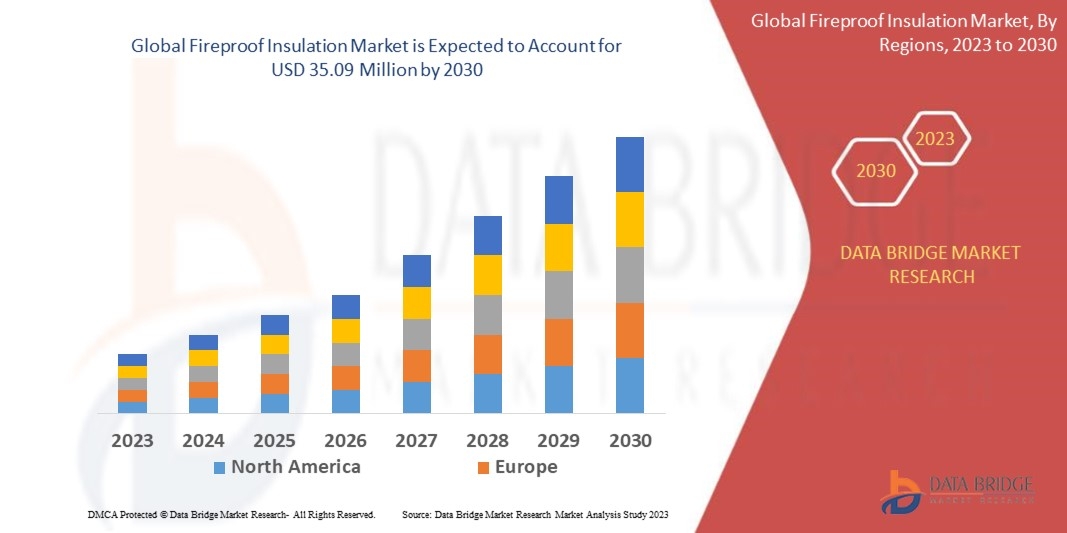
"Executive Summary Fireproof Insulation Market Value, Size, Share and Projections The fireproof insulation market which was USD 28.01 million in 2022, is expected to reach USD 35.09 million by 2030, and is expected to undergo a CAGR of 4.7% during the forecast period of 2023 to 2030Being a comprehensive in nature, Fireproof Insulation Market report undeniably meets the strategic and...