Why Regular Car Diagnostic Testing Matters for Modern UK Vehicles
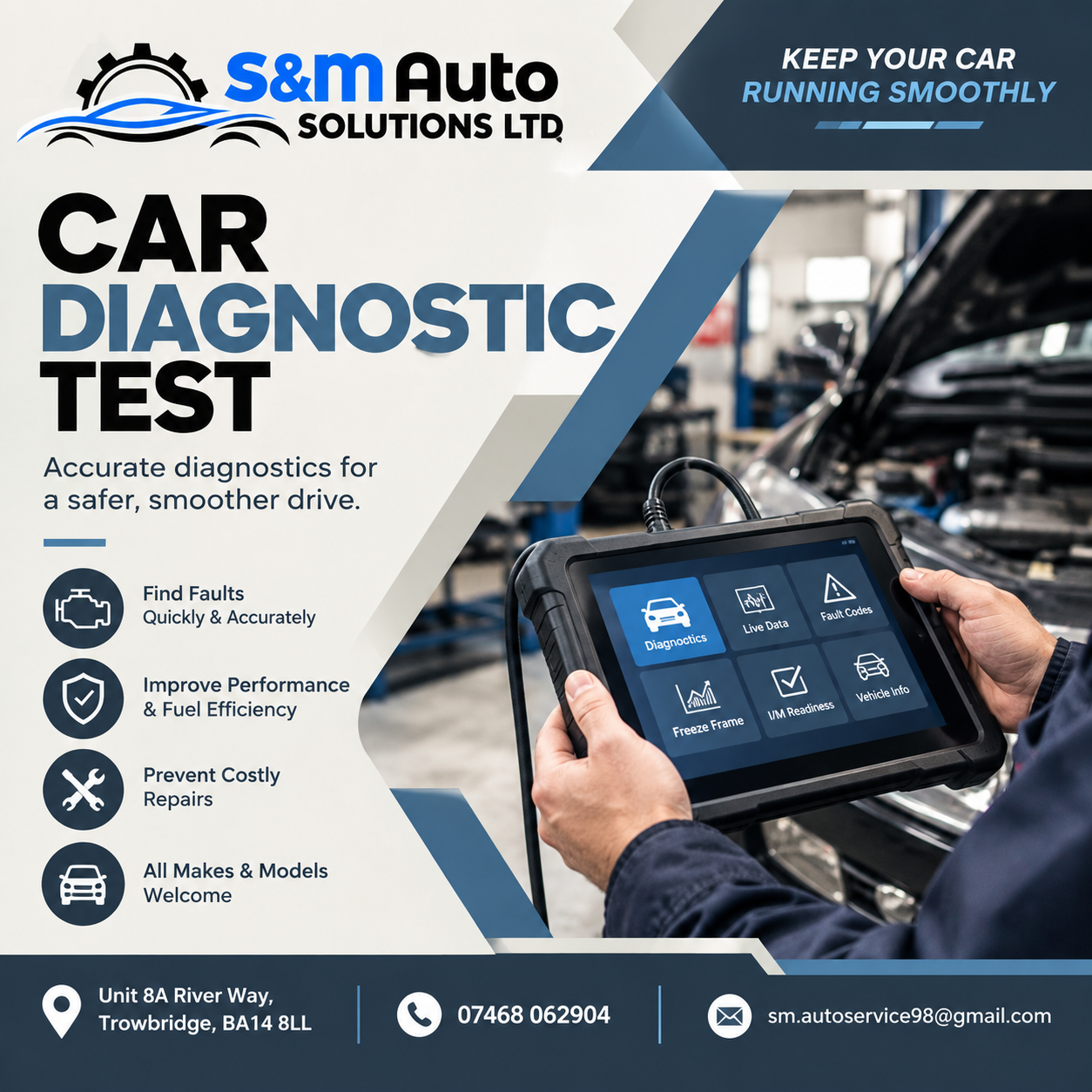
Modern vehicles rely on a combination of mechanical components, electronic control units, sensors, and computerised systems. When something goes wrong, the cause is not always obvious from unusual noises or warning lights alone. A car diagnostic test can help identify stored fault codes and provide useful information about systems that may require further inspection.
For drivers searching for a car diagnostic test Near Me, understanding what diagnostic testing involves can make it easier to recognise potential problems and decide when professional assessment may be appropriate.
What Is a Car Diagnostic Test?
A vehicle diagnostic test uses specialist equipment to communicate with the car’s onboard computer systems. Modern vehicles typically contain several electronic control units that monitor components such as the engine, transmission, braking system, emissions equipment, and other electrical systems.
When a sensor detects an abnormal reading, the vehicle may store a diagnostic trouble code (DTC). A diagnostic scanner can retrieve these codes and provide technicians with information that supports further investigation.
However, a fault code does not always identify the failed component by itself. For example, a sensor-related code may result from damaged wiring, a poor electrical connection, or another underlying problem. This is why diagnostic testing should normally be combined with physical inspection and technical knowledge.

Common Signs That Diagnostic Testing May Help
Drivers do not necessarily need to wait until a vehicle develops a serious fault before considering a diagnostic check. Several warning signs may justify further investigation.
Common examples include:
- An engine warning light appearing on the dashboard
- Difficulty starting the vehicle
- Uneven engine performance or hesitation
- Unexpected loss of power
- Poor fuel economy
- Transmission-related warning messages
- Problems with electronic or electrical systems
- Unusual emissions or failed emissions-related checks
- Warning lights that repeatedly return after being cleared
A diagnostic check can also be useful when a vehicle behaves differently but there is no obvious mechanical explanation.
Why Modern Vehicles Need More Than Visual Inspection
Traditional mechanical inspection remains important, but modern cars increasingly depend on electronic systems. Sensors continuously measure factors such as engine temperature, air pressure, oxygen levels, wheel speed, and fuel-related parameters.
This means that some faults may not produce an obvious physical symptom at first.
For example, an intermittent electrical connection may cause a warning light to appear occasionally and then disappear. Similarly, a faulty sensor can affect engine operation without creating visible mechanical damage.
A car diagnostic test UK drivers can access through a qualified automotive workshop may therefore be an important part of systematic troubleshooting.
The diagnostic process generally involves:
- Connecting compatible diagnostic equipment to the vehicle.
- Scanning relevant electronic control units.
- Recording stored or pending fault codes.
- Reviewing available live data where appropriate.
- Comparing results with manufacturer specifications.
- Carrying out additional testing to identify the underlying cause.
- Repairing or replacing the affected component when confirmed.
- Rechecking the vehicle after repairs.
This approach can help reduce unnecessary parts replacement because technicians can investigate the evidence before deciding what needs attention.

Common Diagnostic Challenges and Practical Solutions
One of the biggest challenges with vehicle diagnostics is assuming that a fault code automatically means a particular component must be replaced.
In reality, a diagnostic code is often the starting point rather than the final answer.
For example, an engine management code could be associated with a sensor, but the actual cause might involve wiring, connectors, air leaks, fuel delivery, or another related system. Clearing the warning light without identifying the cause may only provide a temporary solution.
Another challenge is intermittent faults. These can be difficult to reproduce because the problem may only occur under certain temperatures, driving conditions, or electrical loads.
Useful diagnostic practices include:
- Recording when the fault occurs
- Noting warning lights and dashboard messages
- Avoiding unnecessary replacement of components before testing
- Checking wiring and electrical connections
- Using manufacturer-specific information where available
- Confirming repairs through a follow-up diagnostic check
For motorists looking for auto diagnostic near me, choosing a workshop with appropriate diagnostic equipment and experienced technicians can be particularly relevant for complex electronic faults.
The Growing Role of Vehicle Diagnostics
Vehicle diagnostics are becoming increasingly important as manufacturers introduce more electronic systems, advanced driver-assistance features, hybrid technology, and connected vehicle functions.
Even conventional petrol and diesel vehicles now contain sophisticated computer-controlled systems. Hybrid and electric vehicles add further electronic components and high-voltage systems, requiring specialist knowledge and appropriate safety procedures.
Drivers searching for car diagnostic Trowbridge may therefore encounter different levels of diagnostic capability between workshops. The appropriate equipment depends on the vehicle’s make, model, year, and systems being investigated.
For example, a basic code reader may retrieve generic engine fault information, while more advanced diagnostic equipment can access manufacturer-specific systems and provide additional live data.

S&M Auto Service provides information about diagnostic testing and vehicle fault investigation through its car diagnostic test service page, illustrating the type of diagnostic support available for motorists dealing with electronic vehicle faults.
Final Takeaway
A car diagnostic test is a useful tool for understanding electronic and computer-controlled vehicle problems, but it should not be treated as a replacement for proper mechanical inspection. Fault codes provide valuable clues, while accurate diagnosis depends on interpreting those clues alongside symptoms, live data, wiring checks, and other relevant tests.
For UK motorists, early investigation of warning lights, unusual performance, and recurring electrical problems can help prevent minor issues from developing into more complicated faults. As vehicles become increasingly dependent on electronic technology, diagnostic testing is likely to remain an important part of responsible vehicle maintenance and fault finding.
Категории
Больше
" According to the latest report published by Data Bridge Market Research, the Denim Market The global denim market size was valued at USD 71.14 billion in 2024 and is expected to reach USD 119.51 billion by 2032, at a CAGR of 6.70% during the forecast period A number of aspects that are kept into view while creating an outstanding Denim Market report...

" According to the latest report published by Data Bridge Market Research, the Digital Market The global digital marketing software market size was valued at USD 88.63 billion in 2024 and is expected to reach USD 294.81 billion by 2032, at a CAGR of 16.21% during the forecast period This client-centric, leading edge and truthful Digital Market report is generated with the...
Polyacrylamide is a water-soluble functional polymer that supports flocculation, thickening, clarification, stabilization, and solid-liquid separation. Its adaptable chemical properties allow it to address different requirements within industrial and water-treatment processes. These capabilities support improved processing efficiency and effective management of suspended particles. The...
According to the latest report published by Data Bridge Market Research, the Electric Surface Heaters Market CAGR Value The global electric surface heaters market size was valued at USD 1.70 billion in 2025 and is expected to reach USD 3.00 billion by 2033, at a CAGR of 7.40% during the forecast period The market growth is largely fuelled by the increasing demand for...
According to the latest report published by Data Bridge Market Research, the Basil Extracts Market CAGR Value As per Data Bridge Market Research Analysis the collagen beverages market was valued at USD 2.58 million in 2025 and is projected to reach USD 4.14 million by 2033, growing at a CAGR of 6.10% from 2026 to 2033. The market growth is primarily...